
Heat treatment
Solution annealing
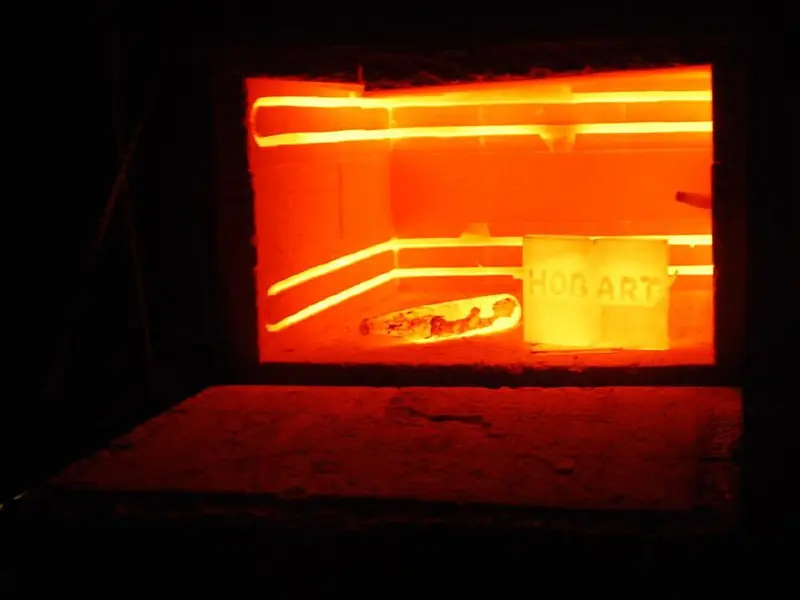
Solution annealing heats the alloy until carbides and phases such as sigma dissolve, followed by rapid cooling. It is the treatment that gives corrosion resistance back to stainless, duplex and nickel alloys after forging.
What we do
- Stainless 304L, 316L, 904L, 254 SMO, duplex F51, super duplex F53/F55, 625, C-276
- Furnaces with temperature and time control and recording
- Forgings, bars, blocks and machined parts
- Report with the cycle applied and, on request, mechanical tests after treatment
Materials
Capacity, maximum dimensions and lead time on request: send the drawing. See alloys in stock.
How solution annealing works
The alloy is heated to a temperature high enough to dissolve carbides, nitrides and intermetallic phases into the matrix, held long enough for the whole section, and cooled rapidly in water or forced air. The rapid cooling keeps the elements in solution and prevents the unwanted phases from precipitating again.
Why it is mandatory after forging
During forging the part passes through temperatures at which austenitic stainless precipitates chromium carbides and duplex and super duplex form sigma phase. These phases remove chromium and molybdenum from the matrix and drastically reduce corrosion resistance and toughness. Solution annealing restores these properties, which is why it is the delivery condition required by ASTM A182, B564 and equivalent standards for these alloys.
Verification
In duplex and super duplex, the quality of the solution anneal is proven by Charpy impact testing at low temperature and, when the customer requests, by corrosion tests and ferrite count. In PH alloys, solution annealing is the first step, followed by aging.
What to send with a quote request
To get a quote, send the alloy and standard of the material, the drawing or the dimensions of the part, the quantity, the required cycle (or the hardness and properties to be reached) and whether verification tests are needed. Parts that will still be machined are treated with allowance, so that the oxidized layer is removed in finish machining.
More in heat treatment
Related services
Frequently asked questions
Can I weld and not solution anneal again?
In most cases yes: L-grade stainless, duplex and nickel alloys are welded without post-weld treatment, as long as the procedure controls the heat input. Solution annealing a large welded part is expensive and may distort it.
Does Dustre perform this service on customer-supplied material?
Yes, as long as the alloy and the specification are defined. We can also supply the material from our stock, with EN 10204 3.1 certificate.
