
Heat treatment
Heat treatment
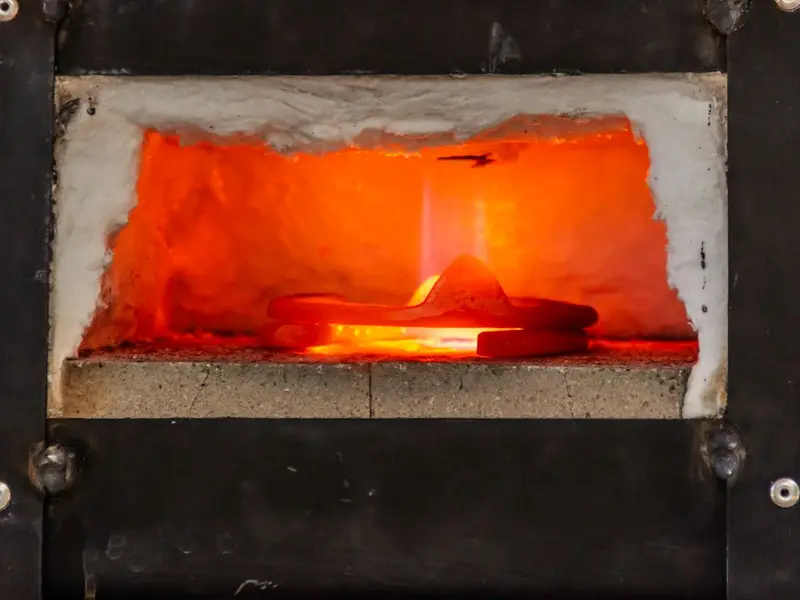
Heat treatment adjusts the hardness, strength, toughness and corrosion resistance of the alloy. We do it in our own furnaces, right after forging or rough machining.
What we do
- Quenching and tempering of alloy steels (4140, 4340, F22, F91)
- Normalizing and annealing
- Solution annealing of stainless, duplex and nickel alloys
- Aging of PH alloys (17-4PH, 718, K-500)
- Stress relief after welding or heavy machining
Materials
Capacity, maximum dimensions and lead time on request: send the drawing. See alloys in stock.
Why heat treatment matters
The same alloy can have very different properties depending on the thermal cycle. An annealed 4140 steel is soft and easy to machine; quenched and tempered, it has the strength for highly loaded shafts and bolts. A poorly solution-annealed duplex stainless loses toughness and corrosion resistance because of intermetallic phases. Heat treatment is what brings the material to the properties the standard and the design require.
How we choose the cycle
The cycle starts from the material standard and from what the part must deliver: hardness, strength, toughness or corrosion resistance. We define temperature, holding time according to the section thickness, cooling medium and, when applicable, tempering or aging temperature. The furnace records the actual cycle, and that record accompanies the part certificate.
Treatment and testing in the same plant
After treatment the part can go straight to the laboratory: hardness to confirm the result, tensile and Charpy on coupons from the same heat and the same treatment lot, and PMI to confirm the alloy. The certificate then comes out with the results that prove the cycle applied.
What to send with a quote request
To get a quote, send the alloy and standard of the material, the drawing or the dimensions of the part, the quantity, the required cycle (or the hardness and properties to be reached) and whether verification tests are needed. Parts that will still be machined are treated with allowance, so that the oxidized layer is removed in finish machining.
More in heat treatment
Related services
Frequently asked questions
Do you heat treat third-party parts?
Yes, as long as the material and the cycle are defined. Send the alloy, the standard and the hardness or property you need to reach.
Which heat treatment does my part need?
It depends on the alloy and the requirement: alloy steels use quenching and tempering, austenitic stainless and duplex use solution annealing, PH alloys use solution annealing and aging. Send the standard and the desired property and we indicate the cycle.
Does Dustre perform this service on customer-supplied material?
Yes, as long as the alloy and the specification are defined. We can also supply the material from our stock, with EN 10204 3.1 certificate.
