
Testing laboratory
Tensile test
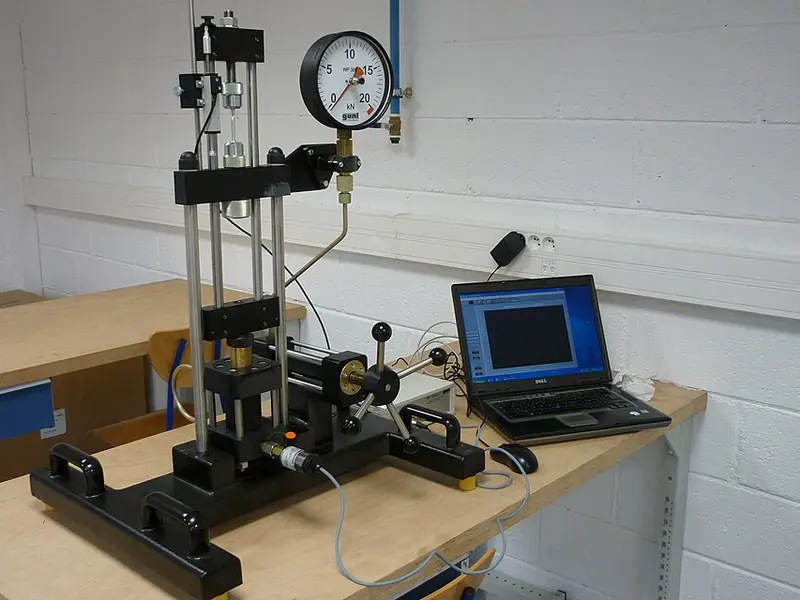
The specimen is pulled until it breaks. The test measures yield strength, tensile strength, elongation and reduction of area.
What we do
- Specimens taken per ASTM A370 / E8
- Result on the material certificate
Materials
Capacity, maximum dimensions and lead time on request: send the drawing. See alloys in stock.
How the tensile test works
A machined specimen with standardized dimensions is clamped in the grips of the machine and pulled until it breaks. The machine records force and elongation throughout the test. From that curve come the yield strength, tensile strength, elongation and reduction of area.
Why it is required
Material standards such as ASTM A182, A105, A564 and B564 set minimum values for yield strength, tensile strength and elongation. The tensile test proves that the material, after forging and heat treatment, meets these minimums. It is required for pressure forgings, critical parts and whenever the customer orders lot testing.
Taking the specimens
The position and orientation of the specimen (longitudinal or transverse, surface or mid-radius) follow the material standard, because the properties vary across the part. For forgings, the specimen may come from a prolongation of the part itself or from a test piece of the same treatment lot.
What to send with a quote request
Send the alloy and standard, the number of tests, the required orientation and whether the specimen comes from a prolongation of the part or from a separate sample.
More in testing laboratory
Frequently asked questions
What is the difference between yield strength and tensile strength?
Yield strength is the stress from which the material deforms permanently; it is the value used in design. Tensile strength is the maximum stress the material withstands before breaking.
Does Dustre perform this service on customer-supplied material?
Yes, as long as the alloy and the specification are defined. We can also supply the material from our stock, with EN 10204 3.1 certificate.
