
Testing laboratory
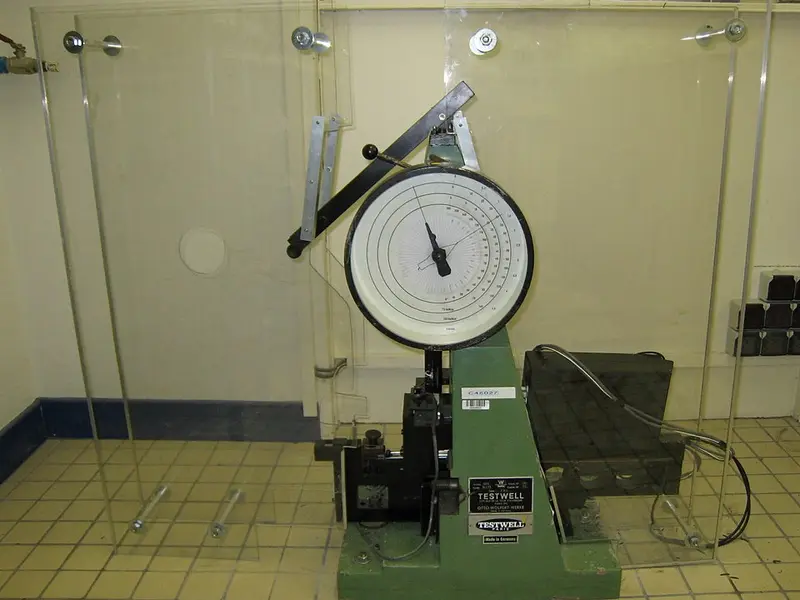
Charpy impact test
The Charpy test measures the energy absorbed to break a notched specimen. It is required for low-temperature service and for duplex and super duplex.
What we do
- V-notch per ASTM A370 / E23
- Testing at room temperature and below zero (e.g. −46 °C)
Materials
Capacity, maximum dimensions and lead time on request: send the drawing. See alloys in stock.
How the Charpy test works
A V-notched specimen is supported in the machine and broken by a pendulum. The energy absorbed in fracture, in joules, measures the toughness of the material: the higher, the better the material resists cracking under impact. The test can be done at room temperature or with the specimen cooled.
Low-temperature testing
Carbon and low-alloy steels lose toughness in the cold and can fracture in a brittle manner. That is why standards such as ASTM A350 (LF2 at −46 °C) and A522 require low-temperature Charpy. In duplex and super duplex, Charpy at −46 °C is also a quality control of the solution anneal: the presence of sigma phase collapses the absorbed energy.
Result
The result is the average of three specimens, with a minimum individual value, per the standard. Lateral expansion and percent shear fracture can also be recorded when the specification requires.
What to send with a quote request
Send the alloy and standard, the test temperature, the acceptance criterion, the specimen orientation and the number of sets.
More in testing laboratory
Frequently asked questions
Why does duplex need Charpy?
Because sigma phase, which forms when duplex spends too long at high temperature, collapses toughness before it shows in other tests. Charpy at −46 °C is a practical way to prove the solution anneal was done right.
Does Dustre perform this service on customer-supplied material?
Yes, as long as the alloy and the specification are defined. We can also supply the material from our stock, with EN 10204 3.1 certificate.
